
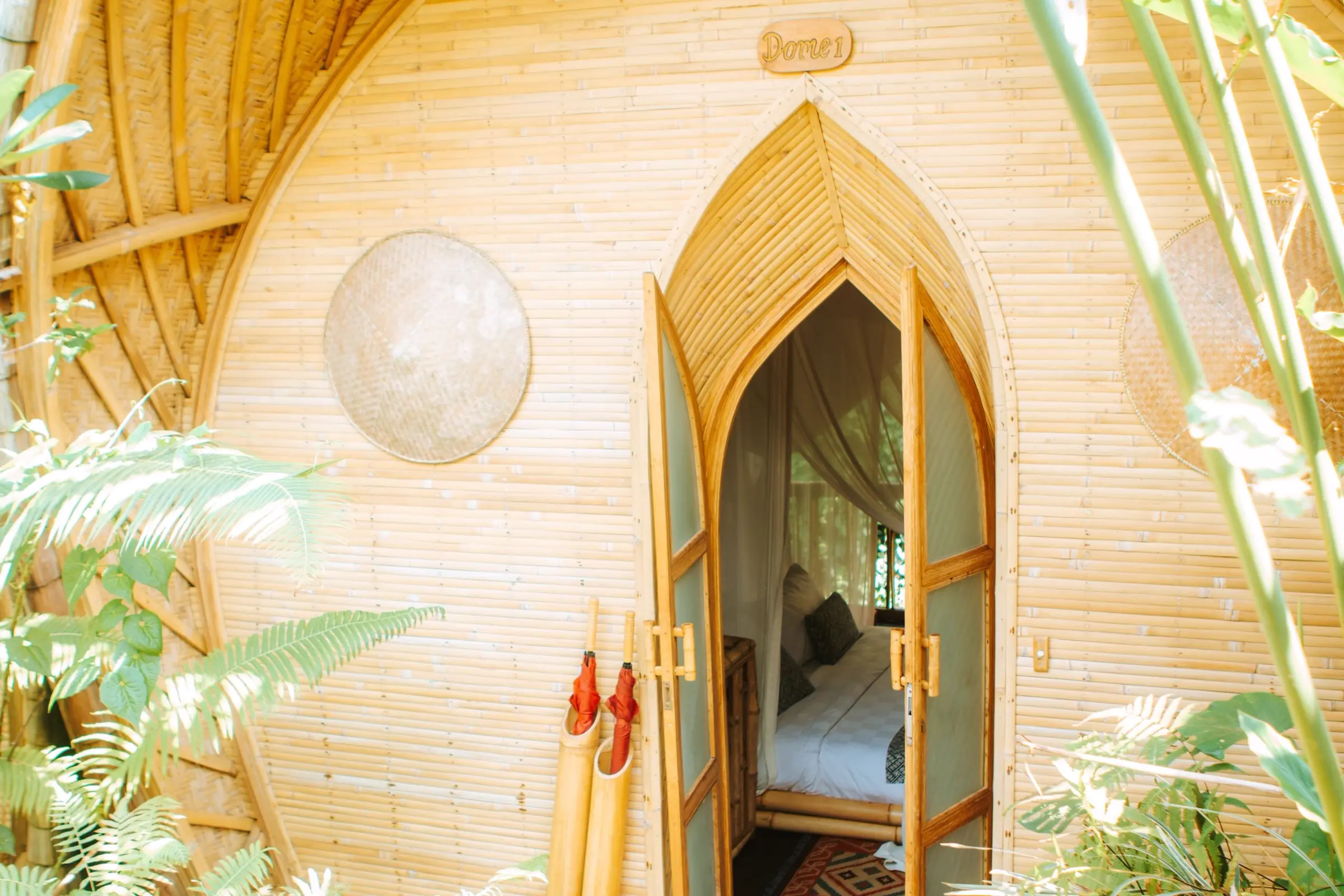
Not a certification or a slogan — just a set of choices about materials, pace, and how a small villa can sit lightly on the land it's built on.
Sustainability gets used as a marketing word often enough that it's worth being specific about what it actually means at Swarma, because for us it isn't a statement — it's a set of practical decisions, made early, about how this place would be built and run.
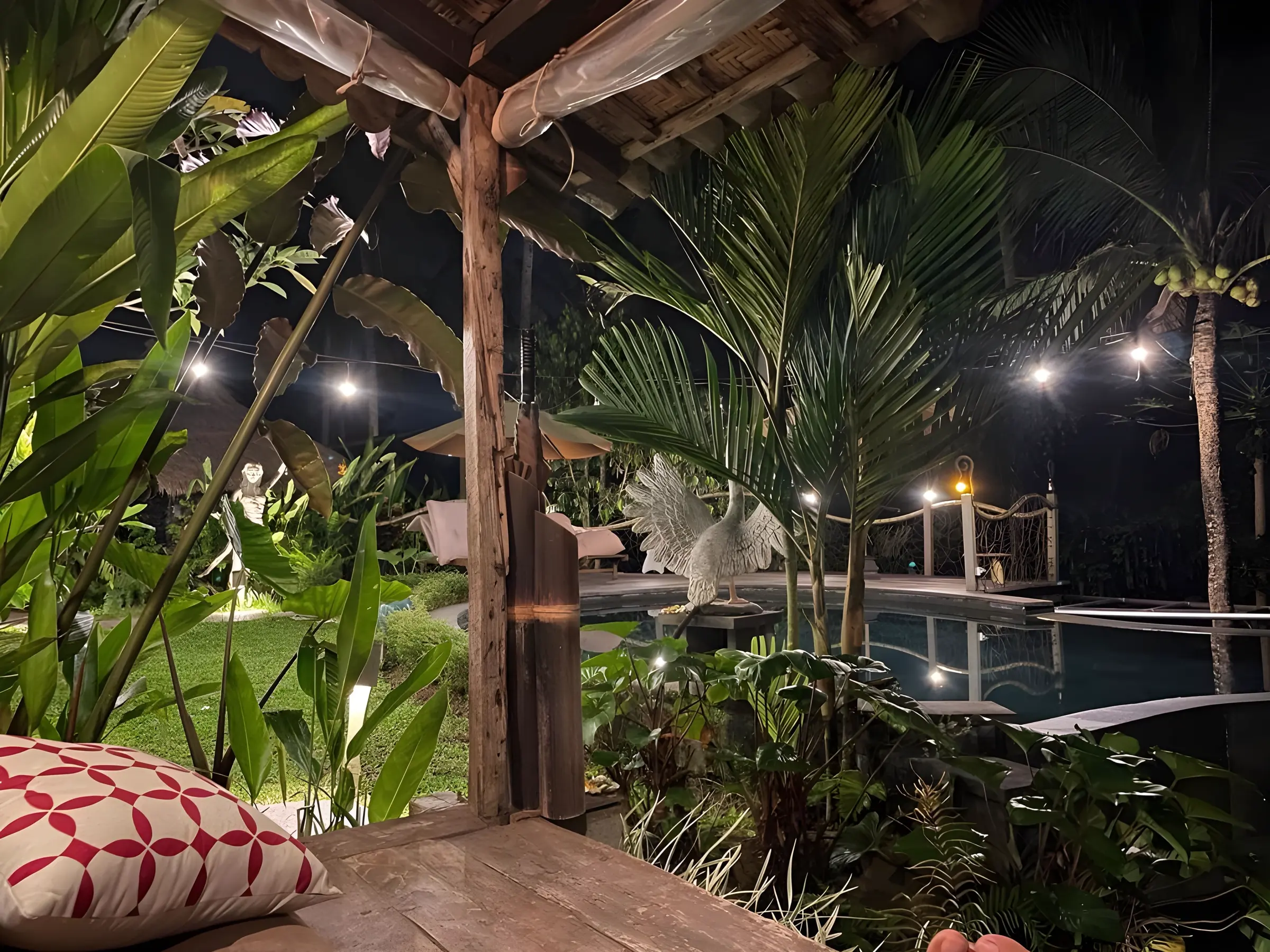
It starts with materials. The Gladak House is built from reclaimed Javanese teakwood — timber with a previous life, given a second one here rather than sourced new. The Bamboo Hexa and Bamboo Dome are built from bamboo itself: a material that grows quickly, requires far less energy to work with than concrete or steel, and breathes in a way that reduces the need for heavy air conditioning even in Bali's humidity. None of these choices were made purely for aesthetics, though we're glad they happen to look beautiful too.
It continues in the pace of the place. A property built around three houses rather than thirty doesn't need to pull the same volume of water, generate the same volume of waste, or place the same pressure on a small village's infrastructure. Staying small was, in part, a sustainability decision as much as a design one.
We won't claim perfection — sustainability is a direction, not a finished state, and we're still learning where we can do better. But every material choice, every decision about scale, and every plan for how this property continues to grow has started from the same question: does this let Swarma sit a little more lightly on the land it's built on? We'd rather keep asking that question honestly than put a badge on the website and stop thinking about it.